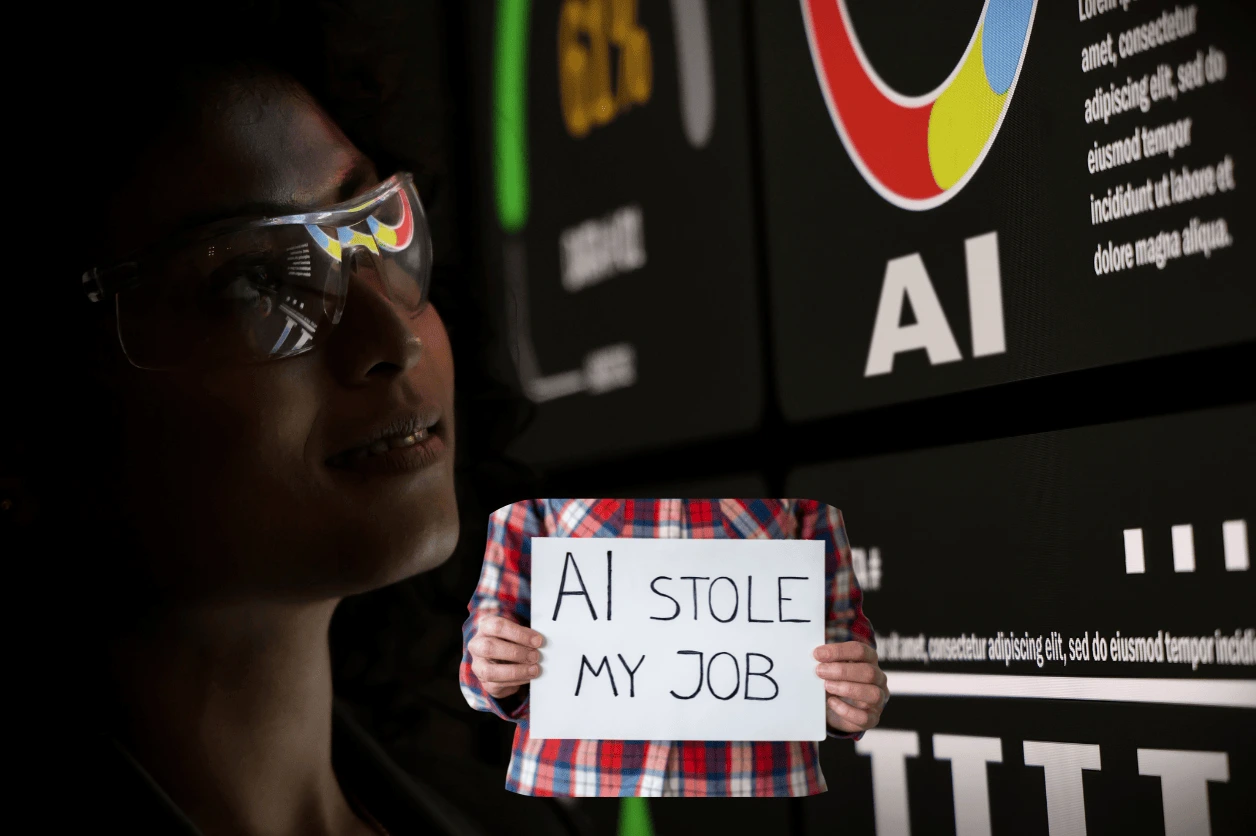
Is AI Taking Everyone's Jobs? The Truth About Automation and Employment
As artificial intelligence and automation technologies advance at unprecedented rates, a fundamental question dominates workplace discussions: Is AI taking everyone's jobs? The fear of mass unemployment due to automation has captured headlines, sparked social media debates, and created anxiety among workers across all industries. However, the reality of AI's impact on employment is far more nuanced and complex than the dystopian narratives suggest.
The Historical Context: Technology and Job Transformation
Understanding Past Technological Revolutions
To understand AI's current impact on employment, we must examine historical patterns of technological disruption. Every major technological advancement has triggered similar fears about job elimination:
The Industrial Revolution (1760-1840): Mechanization sparked fears that machines would eliminate all manufacturing jobs. Instead, manufacturing employment grew dramatically as new industries emerged, creating entirely new job categories and increasing overall productivity.
The Computer Revolution (1950-1980): Computers were predicted to eliminate administrative and clerical jobs. While some roles disappeared, millions of new jobs emerged in programming, system administration, and computer operations.
The Internet Revolution (1990-2000): E-commerce was expected to destroy retail jobs. While some traditional retail roles declined, new opportunities emerged in digital marketing, e-commerce management, and logistics.
Each technological revolution followed a similar pattern: initial job displacement in specific sectors, followed by job creation in new industries, and ultimately net job growth as the economy adapted and expanded.
The AI Difference: Why This Time Feels Different
AI automation differs from previous technological advances in several crucial ways:
Cognitive Capability: Unlike previous technologies that primarily automated physical tasks, AI can perform cognitive tasks previously exclusive to human workers
Learning Capability: AI systems continuously improve and expand their capabilities without requiring reprogramming
Broad Applicability: AI can be applied across virtually all industries and job functions simultaneously
Speed of Adoption: AI technology is advancing and deploying at unprecedented rates
These differences explain why AI's impact on employment feels more threatening than previous technological revolutions. However, historical patterns suggest that the ultimate outcome may be similar: transformation rather than elimination of work.
The Current Reality: AI's Actual Impact on Jobs
Jobs Most Vulnerable to AI Automation
Certain job categories face genuine risk of significant AI automation:
Data Processing and Analysis: Roles involving routine data analysis, report generation, and information processing are highly susceptible to AI automation. AI systems can process vast amounts of data faster and more accurately than humans.
Customer Service: Basic customer service inquiries, order processing, and routine support tasks are increasingly handled by AI chatbots and virtual assistants.
Content Creation: AI can now generate basic news articles, marketing copy, social media posts, and even simple video content.
Administrative Tasks: Scheduling, email management, document preparation, and basic administrative functions are being automated by AI assistants.
Manufacturing and Logistics: Robotics and AI systems continue to automate physical tasks in manufacturing, warehousing, and delivery operations.
Jobs Resistant to AI Automation
Many jobs remain largely resistant to AI automation due to their reliance on uniquely human capabilities:
Creative Professions: While AI can generate content, truly creative work requiring originality, emotional depth, and cultural understanding remains human-dominated.
Complex Strategic Roles: Executive leadership, strategic planning, and complex decision-making roles require human judgment, experience, and contextual understanding.
Healthcare Professionals: While AI assists with diagnostics and treatment recommendations, the human elements of patient care, empathy, and ethical decision-making remain essential.
Education and Training: Teaching, mentoring, and skill development require human connection, adaptability, and emotional intelligence.
Skilled Trades: Complex physical tasks requiring fine motor skills, problem-solving, and adaptability in unpredictable environments remain human-dominated.
Mental Health and Counseling: The therapeutic relationship and human empathy are central to mental health treatment.
The Job Creation Side: New Opportunities Emerging
AI-Related Job Growth
While AI automates some jobs, it's creating entirely new categories:
AI and Machine Learning Engineers: Demand for specialists who develop, implement, and maintain AI systems continues to grow exponentially.
AI Prompt Engineers: Professionals who specialize in crafting effective prompts to guide AI systems toward desired outcomes.
AI Ethics and Governance Specialists: Experts who ensure AI systems operate responsibly, ethically, and in compliance with regulations.
AI Trainers and Data Labelers: Workers who train AI systems by providing labeled data, feedback, and quality control.
AI Integration Specialists: Professionals who help organizations integrate AI systems into existing workflows and processes.
Augmented Jobs: Enhanced Human Capabilities
Many jobs are being transformed rather than eliminated:
Healthcare: AI assists doctors with diagnostics and treatment planning, allowing them to focus on patient care and complex cases.
Law: AI helps lawyers with research, document review, and case analysis, freeing them for strategy and client interaction.
Marketing: AI handles data analysis and campaign optimization, while humans focus on creative strategy and brand building.
Finance: AI automates routine analysis and reporting, while financial professionals focus on complex advisory relationships.
Education: AI handles grading and basic instruction, while teachers focus on mentoring and personalized learning.
The Economic Evidence: What the Data Shows
Current Employment Trends
Recent economic data reveals a more complex picture than simple job elimination:
Unemployment Rates: Despite rapid AI adoption, global unemployment rates remain near historical lows in most developed economies.
Job Growth Patterns: While some industries experience job declines, others show significant growth, particularly in AI-related and technology sectors.
Wage Trends: Jobs requiring AI skills and human-AI collaboration command premium wages, while routine task wages face pressure.
Productivity Gains: Organizations implementing AI show significant productivity improvements, often leading to business expansion and job creation.
Industry-Specific Analysis
Different industries show varying patterns of AI impact:
Technology Sector: Rapid job growth in AI development, cloud computing, and data science roles
Healthcare: Job growth in specialized medical roles, while administrative roles decline
Manufacturing: Overall employment stable, but shifting toward higher-skilled roles
Retail: Decline in traditional retail jobs, growth in e-commerce and logistics roles
Finance: Reduction in routine processing roles, growth in advisory and specialized roles
The Skills Evolution: Preparing for the AI-Augmented Workplace
Skills in Increasing Demand
The AI era emphasizes certain human capabilities:
Critical Thinking and Problem-Solving: Ability to analyze complex situations and develop innovative solutions
Creativity and Innovation: Generating original ideas and approaches that AI cannot replicate
Emotional Intelligence: Understanding and managing human emotions and relationships
Adaptability and Learning: Quickly acquiring new skills and adapting to changing circumstances
Strategic Thinking: Developing long-term plans and understanding complex system interactions
Cross-Disciplinary Knowledge: Combining knowledge from multiple fields to solve complex problems
Skills Becoming Less Valuable
Routine and predictable skills face declining demand:
Routine Data Processing: Tasks involving predictable data analysis and reporting
Basic Administrative Functions: Scheduling, filing, and routine correspondence
Simple Content Creation: Generating standard marketing copy or basic reports
Repetitive Physical Tasks: Predictable, repetitive manual labor
Basic Customer Service: Handling routine inquiries and transactions
The Education and Training Imperative
Reskilling and Upskilling Programs
Organizations and governments are investing heavily in workforce adaptation:
Corporate Training Programs: Companies are investing billions in reskilling employees for AI-augmented roles
Government Initiatives: Public programs focus on preparing workers for the AI economy
Online Learning Platforms: Massive growth in AI-related courses and certification programs
Apprenticeship Programs: Traditional apprenticeship models are being adapted for AI-era skills
Educational System Evolution
Educational institutions are adapting their curricula:
K-12 Education: Increased focus on critical thinking, creativity, and digital literacy
Higher Education: New programs in AI, data science, and human-AI collaboration
Vocational Training: Enhanced programs for AI-augmented skilled trades
Executive Education: Programs for leaders managing AI transformation
The Policy and Social Considerations
Government Policy Responses
Governments are developing policies to manage the transition:
Social Safety Nets: Enhanced unemployment benefits and support systems for displaced workers
Education Investment: Increased funding for STEM education and workforce development
Tax Policy: Consideration of automation taxes to fund worker transition programs
Regulation: Developing frameworks for responsible AI deployment and worker protection
Ethical Considerations
The AI transition raises important ethical questions:
Income Inequality: Concerns about AI benefits concentrating among highly skilled workers
Worker Dignity: Ensuring that automation doesn't diminish human dignity and purpose
Access to Opportunity: Ensuring all segments of society can benefit from AI opportunities
Future of Work: Rethinking the relationship between work, income, and human fulfillment
Future Scenarios: What Might Happen Next?
Optimistic Scenario: Augmented Prosperity
In this scenario, AI primarily augments human capabilities:
- Job Growth: New industries and roles emerge faster than old roles disappear
- Increased Productivity: AI-driven productivity gains lead to economic expansion
- Higher Living Standards: Increased wealth and reduced costs improve quality of life
- Human-AI Collaboration: Workers focus on uniquely human tasks while AI handles routine work
Pessimistic Scenario: Structural Unemployment
This scenario envisions more challenging outcomes:
- Job Displacement: AI eliminates jobs faster than new roles emerge
- Income Inequality: Benefits concentrate among AI owners and highly skilled workers
- Social Disruption: Rapid changes create social and political instability
- Reduced Human Agency: Humans become dependent on AI systems
Most Likely Scenario: Mixed Transformation
Reality will likely combine elements of both scenarios:
- Sector Variation: Different industries experience different levels of disruption
- Geographic Variation: Different regions adapt at different rates
- Skill Polarization: High-skill and low-skill jobs grow while middle-skill routine jobs decline
- Gradual Adaptation: Society gradually adapts to new work patterns and economic structures
Preparing for the AI Future: Individual Strategies
For Workers
Individuals can take proactive steps to prepare:
Continuous Learning: Regularly acquire new skills and knowledge
AI Literacy: Understand how AI systems work and how to collaborate with them
Flexibility: Remain open to career changes and new opportunities
Networking: Build professional relationships and stay informed about industry trends
Personal Branding: Develop unique skills and capabilities that differentiate you from AI
For Students
Education planning should consider AI trends:
STEM Foundation: Strong foundation in science, technology, engineering, and mathematics
Human Skills: Develop communication, creativity, and emotional intelligence
Interdisciplinary Approach: Combine technical knowledge with domain expertise
Practical Experience: Gain hands-on experience with AI tools and systems
Lifelong Learning Mindset: View education as ongoing rather than finite
For Business Leaders
Organizations must prepare their workforces:
Strategic Workforce Planning: Anticipate how AI will affect your industry and roles
Investment in Training: Commit significant resources to employee reskilling
Phased Implementation: Implement AI gradually to allow workforce adaptation
Human-AI Collaboration: Design workflows that leverage strengths of both humans and AI
Ethical Leadership: Ensure AI deployment benefits all stakeholders
The Global Perspective: Variations by Region
Developed Economies
Advanced economies face different challenges and opportunities:
High-Skill Job Growth: Strong demand for AI development and specialized roles
Service Sector Transformation: Significant changes in healthcare, finance, and professional services
Educational Advantages: Strong educational systems support workforce adaptation
Social Safety Nets: Developed social systems can support worker transitions
Developing Economies
Emerging economies face unique considerations:
Leapfrogging Opportunities: Potential to skip certain technological stages
Manufacturing Automation: Traditional manufacturing growth paths may be disrupted
Service Export Opportunities: New possibilities in AI-powered service exports
Education Challenges: Need to rapidly develop AI-relevant skills and capabilities
Conclusion: Transformation, Not Elimination
The evidence suggests that AI is transforming work rather than eliminating it. While certain jobs face genuine disruption, new opportunities are emerging simultaneously. The key factors that will determine outcomes include:
Adaptation Speed: How quickly individuals, organizations, and societies can adapt to new realities
Education Investment: Commitment to developing relevant skills for the AI era
Policy Effectiveness: How well governments manage the transition and support displaced workers
Ethical Implementation: How responsibly AI is developed and deployed
The future of work in the AI era will likely feature:
- More Human-AI Collaboration than pure automation
- Emphasis on Uniquely Human Skills rather than routine tasks
- Continuous Learning and Adaptation as the norm rather than exception
- New Industries and Roles that we can't yet imagine
Rather than asking "Is AI taking everyone's jobs?", we should ask "How can we work alongside AI to create more value and better outcomes?" The answer to this question will determine whether the AI revolution leads to shared prosperity or increased inequality.
The choice is ours. Through thoughtful preparation, ethical development, and inclusive policies, we can harness AI's potential to augment human capabilities rather than replace human workers. The future of work is not predetermined—it's something we actively create through our choices today.
AI is not taking everyone's jobs. It's changing what jobs look like, what skills are valuable, and how humans and machines work together. Those who understand this distinction and prepare accordingly will thrive in the AI-augmented workplace of tomorrow.