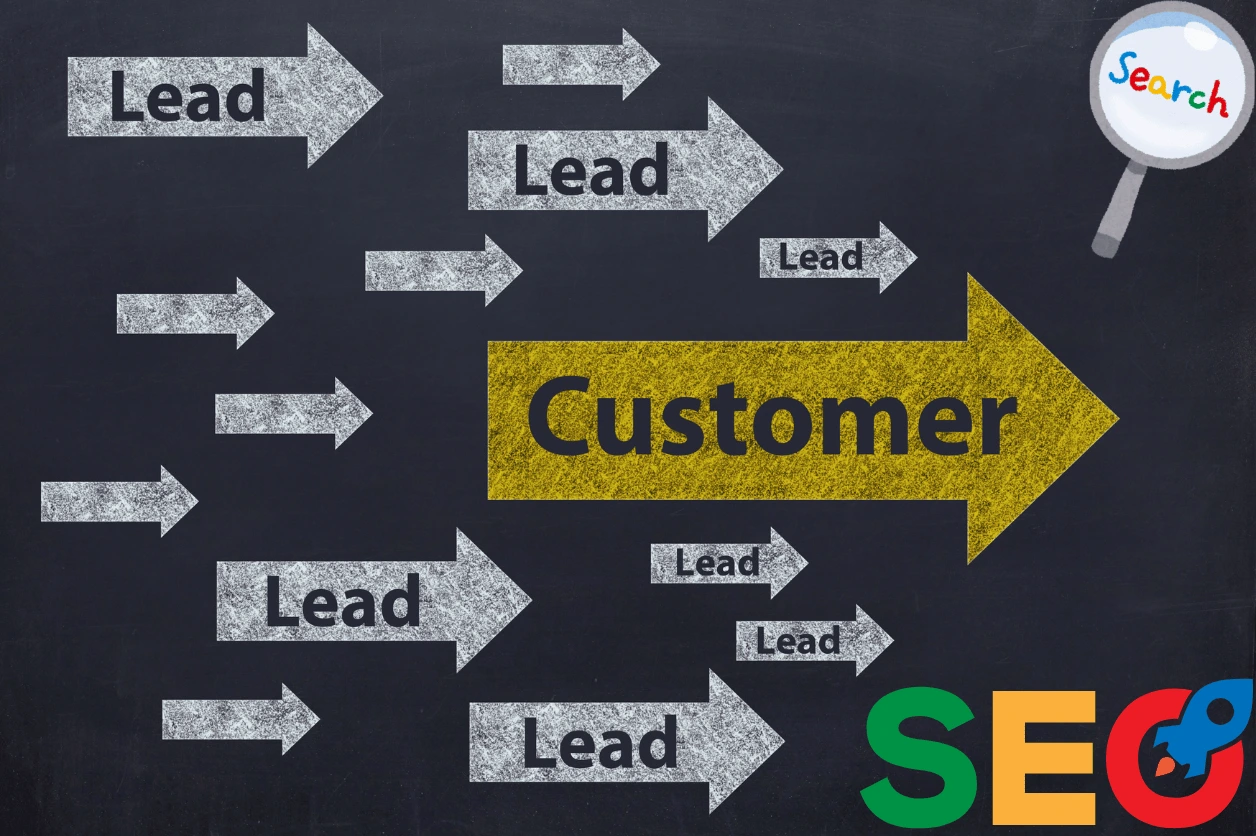
SEO and Lead Generation: How to Get More Customers Online
In today's digital marketplace, the connection between SEO and lead generation has become the lifeblood of sustainable business growth. Companies that master this synergy don't just attract website visitors—they convert those visitors into loyal customers who drive revenue. This comprehensive guide reveals how to transform your online presence from a digital billboard into a powerful customer acquisition engine.
Understanding the SEO-Lead Generation Connection
The Modern Customer Journey
The path from search to sale has evolved dramatically. Today's customers don't just find businesses—they embark on complex journeys that involve multiple touchpoints, extensive research, and careful consideration. Understanding this journey is crucial for effective SEO and lead generation:
Awareness Stage: Potential customers recognize a problem or need and begin searching for solutions. They use broad, informational keywords and are primarily seeking education rather than immediate purchase.
Consideration Stage: Having identified their problem, customers research specific solutions, compare options, and evaluate providers. Search queries become more specific and solution-focused.
Decision Stage: Ready to make a purchase, customers search for providers, compare prices, and look for social proof. Their searches include brand names, reviews, and purchase-intent keywords.
Post-Purchase Stage: Even after conversion, customers continue to search for support, additional products, and community. This stage offers opportunities for retention and upselling.
SEO as Lead Generation Foundation
SEO serves as the foundation of your lead generation strategy by:
Driving Qualified Traffic: SEO attracts visitors actively searching for solutions you provide, resulting in higher conversion rates than other traffic sources.
Building Trust and Authority: High search rankings position your business as an authority in your industry, making visitors more likely to become leads.
Providing Continuous Results: Unlike paid advertising, SEO delivers consistent traffic and leads without ongoing ad spend.
Supporting Multiple Funnel Stages: SEO can target customers at every stage of their journey, from initial awareness to final decision.
Keyword Strategy for Lead Generation
Beyond High-Volume Keywords
Successful lead generation requires sophisticated keyword strategies that go beyond simply targeting high-volume terms:
Intent-Based Keyword Classification
- Informational Keywords: "how to fix leaky faucet" - Top of funnel, educational content
- Commercial Investigation: "best faucet brands 2024" - Middle funnel, comparison content
- Transactional Keywords: "emergency plumber near me" - Bottom funnel, conversion-focused content
- Local Keywords: "plumbing services Brooklyn" - Geographic-specific, high-intent
Long-Tail Keyword Opportunities: Long-tail keywords, while having lower search volume, often demonstrate higher purchase intent and conversion rates. Examples include "residential plumbing services for older homes in Brooklyn" versus generic "plumbing services."
Question-Based Keywords: Targeting questions your ideal customers ask positions you as a helpful authority. Tools like AnswerThePublic and Google's "People Also Ask" feature reveal these opportunities.
Competitive Keyword Analysis
Understanding your competitors' keyword strategies reveals opportunities and gaps:
Keyword Gap Analysis: Identify keywords your competitors rank for that you don't, especially those driving traffic to their lead generation pages.
SERP Analysis: Examine what types of content rank for your target keywords. Are they product pages, blog posts, or comparison guides? This informs your content strategy.
Difficulty vs. Opportunity Assessment: Evaluate keyword difficulty against potential lead value. Sometimes, easier keywords with slightly lower volume can generate more qualified leads.
Content Strategy That Converts
Lead Generation Content Types
Different content types serve different purposes in your lead generation funnel:
Pillar Pages and Ultimate Guides: Comprehensive resources covering broad topics in depth. These pages attract top-of-funnel traffic and establish authority. Example: "The Complete Guide to Home Plumbing Maintenance."
Problem-Solution Blog Posts: Articles that address specific problems and present your services as solutions. These target middle-funnel consideration. Example: "5 Signs You Need to Replace Your Water Heater."
Comparison and Review Content: Content that compares different solutions or reviews products/services. This targets customers in the consideration stage. Example: "Tank vs. Tankless Water Heaters: Which Is Right for Your Home?"
Service and Product Pages: Conversion-focused pages that detail specific offerings with clear calls-to-action. These target bottom-funnel, high-intent searches.
Case Studies and Testimonials: Social proof content that builds trust and addresses objections. These support decision-stage conversions.
Content Optimization for Conversions
Creating content is not enough—it must be optimized to generate leads:
Strategic Call-to-Action Placement: Place CTAs where users are most engaged: after solving a problem, comparing solutions, or demonstrating expertise.
Lead Magnet Integration: Offer valuable resources (ebooks, checklists, webinars) in exchange for contact information. Position these offers at natural decision points in your content.
Trust Signals Integration: Include customer testimonials, awards, certifications, and statistics throughout content to build credibility.
Mobile Optimization: Ensure your content and lead capture forms work seamlessly on mobile devices, where many local searches occur.
Page Speed Optimization: Fast-loading pages reduce bounce rates and improve user experience, directly impacting lead generation.
Technical SEO for Lead Generation
Website Architecture for Conversion
Your technical foundation must support both search engines and conversion goals:
Conversion-Focused Navigation Structure: Organize your site architecture to guide users toward conversion points. Service pages should be accessible within 2-3 clicks from any page.
URL Structure Optimization: Use clean, descriptive URLs that include target keywords and clearly indicate page content. Example: yoursite.com/services/emergency-plumbing
Internal Linking Strategy: Create internal links that guide users through their buyer journey while distributing page authority throughout your site.
Schema Markup Implementation: Use structured data to help search engines understand your content and display rich snippets that improve click-through rates.
Mobile-First Optimization
With mobile searches dominating local lead generation, mobile optimization is critical:
Responsive Design: Ensure your website provides excellent user experience across all device sizes.
Mobile Page Speed: Optimize images, minimize code, and leverage caching to achieve fast loading times on mobile networks.
Mobile-Friendly Forms: Design lead capture forms that are easy to complete on small screens with minimal typing.
Click-to-Call Functionality: Make it easy for mobile users to contact you directly from search results and your website.
Local SEO for Lead Generation
Google Business Profile Optimization
Your Google Business Profile is often the first touchpoint for local customers:
Complete and Accurate Information: Ensure your business name, address, phone number, and hours are accurate and complete.
Service and Category Selection: Choose relevant primary and secondary categories that accurately describe your services.
Photo and Video Optimization: Upload high-quality images of your work, team, and facilities. Include before-and-after photos for service businesses.
Review Generation Strategy: Actively solicit and respond to customer reviews. Higher review counts and ratings improve local search rankings.
Q&A Section Optimization: Anticipate common customer questions and provide helpful answers in your Q&A section.
Local Content Strategy
Create content that targets local search intent:
Location-Specific Service Pages: Create dedicated pages for each service area you serve. Example: "Plumbing Services in Manhattan" rather than just "Plumbing Services."
Local News and Events: Connect your services to local issues, events, and news stories. Example: "How NYC's Winter Weather Affects Your Pipes."
Local Case Studies: Showcase work you've done for local customers, including specific neighborhoods or landmarks.
Local Partnership Content: Collaborate with other local businesses to create content that benefits the community and generates cross-referrals.
Conversion Rate Optimization (CRO)
Lead Capture Form Optimization
Your forms are the critical final step in converting visitors to leads:
Form Length Optimization: Balance information needs with user patience. Start with minimal required fields and progressively request more information.
Field Labeling and Placement: Use clear, intuitive labels and place fields in logical order. Group related information together.
Error Handling and Validation: Provide clear, helpful error messages and validate information in real-time to prevent frustration.
Multi-Step vs. Single-Page Forms: Test different form formats. Multi-step forms can reduce perceived effort and improve completion rates.
Mobile Form Optimization: Ensure forms are easy to complete on mobile devices with appropriate input types and large touch targets.
Trust and Credibility Elements
Build trust throughout the conversion process:
Security Indicators: Display SSL certificates, security badges, and privacy policies prominently.
Social Proof Integration: Showcase customer testimonials, case studies, and review ratings near conversion points.
Professional Design: Ensure your website design reflects the quality and professionalism of your services.
Contact Information Accessibility: Make your phone number, address, and contact information easily accessible from all pages.
Risk Reversal: Offer guarantees, free consultations, or trial periods to reduce purchase anxiety.
Analytics and Measurement
Lead Generation Tracking Setup
Proper measurement is essential for optimization:
Conversion Goal Setup: Configure goals in Google Analytics for form submissions, phone calls, and other lead generation activities.
Call Tracking Implementation: Use call tracking numbers to measure which pages and keywords drive phone leads.
Form Submission Tracking: Implement event tracking for all form submissions, including abandoned forms.
Attribution Modeling: Use multi-touch attribution to understand how different channels and touchpoints contribute to conversions.
Key Performance Indicators
Track metrics that matter for lead generation:
Lead Quality Metrics: Measure not just quantity but quality of leads through lead-to-customer conversion rates.
Cost Per Lead (CPL): Calculate how much you spend to generate each lead through organic search.
Lead Conversion Rate: Track what percentage of website visitors become leads.
Revenue Per Lead: Measure the ultimate value of leads generated through SEO.
Channel Attribution: Understand which pages and keywords drive the most valuable leads.
Advanced Strategies and Tactics
Featured Snippet Optimization
Positioning your content in featured snippets can dramatically increase visibility and lead generation:
Question-Based Content: Structure content around questions likely to trigger featured snippets.
Clear, Concise Answers: Provide direct answers to questions at the beginning of content, followed by detailed explanations.
Structured Data Markup: Use appropriate schema markup to help search engines understand your content structure.
List and Table Formats: Organize information in lists and tables, which are commonly featured in snippets.
Video SEO for Lead Generation
Video content can significantly enhance lead generation efforts:
Video Testimonials: Customer testimonial videos build trust and credibility more effectively than text alone.
How-To Videos: Demonstrate your expertise and help potential customers solve problems, positioning you as the solution provider.
Product and Service Demonstrations: Show your offerings in action, helping customers understand their value.
Video Optimization: Optimize video titles, descriptions, and tags with relevant keywords, and include clear calls-to-action.
Common SEO Lead Generation Mistakes to Avoid
Content-Only Focus
Creating content without conversion optimization is a common mistake:
Missing Calls-to-Action: Failing to include clear, compelling CTAs in your content
Poor User Experience: Content that's difficult to read or navigate on mobile devices
Lack of Trust Signals: Not including testimonials, certifications, or social proof
No Lead Magnets: Missing opportunities to capture leads through valuable offers
Technical SEO Neglect
Technical issues can undermine even the best content strategy:
Slow Page Speed: Pages that load slowly lose visitors and rankings
Mobile Optimization Issues: Poor mobile experience eliminates mobile lead opportunities
Broken Links and Errors: Technical problems frustrate users and hurt search rankings
Poor Site Structure: Confusing navigation prevents users from finding conversion pages
Local SEO Oversights
Local businesses often miss critical local optimization opportunities:
Incomplete Google Business Profile: Missing or inaccurate business information
No Local Content: Failing to create location-specific content
Ignoring Reviews: Not actively managing customer reviews and ratings
No Local Schema: Missing structured data that helps with local search visibility
Building a Sustainable Lead Generation System
Process Automation
Automate repetitive tasks to scale your lead generation efforts:
Lead Nurturing Automation: Set up email sequences that automatically nurture leads over time
Content Distribution Automation: Schedule and distribute content across multiple channels automatically
Review Generation Automation: Systematically request and manage customer reviews
Analytics Reporting Automation: Create automated reports to track performance and identify opportunities
Continuous Optimization
Lead generation is an ongoing process of testing and improvement:
A/B Testing: Continuously test headlines, calls-to-action, and page layouts
User Behavior Analysis: Use heat maps and session recordings to understand how users interact with your site
Conversion Funnel Analysis: Identify where users drop off in the conversion process and optimize those points
Competitive Monitoring: Regularly analyze competitor strategies and identify new opportunities
Future Trends in SEO Lead Generation
AI and Machine Learning Impact
Artificial intelligence is changing how we approach SEO and lead generation:
Search Intent Understanding: AI is getting better at understanding user intent beyond keywords
Personalization: Search results and content recommendations are becoming more personalized
Voice Search Optimization: Voice searches require different optimization strategies
Predictive Analytics: AI tools can predict which content will generate the most leads
Emerging Technologies
New technologies are creating new lead generation opportunities:
Augmented Reality: AR experiences can showcase products and services in new ways
Interactive Content: Interactive calculators, assessments, and tools generate high-quality leads
Chatbots and Conversational AI: Automated conversations can qualify leads 24/7
Blockchain for Trust: Blockchain technology can enhance trust and verification in lead generation
Conclusion: Building Your Lead Generation Engine
Effective SEO and lead generation is not about tricks or shortcuts—it's about building a comprehensive system that attracts, engages, and converts your ideal customers. Success requires:
Strategic Foundation: Deep understanding of your customers, their journey, and their needs
Technical Excellence: Website and technical SEO that provides excellent user experience
Valuable Content: Content that solves problems and demonstrates expertise
Conversion Optimization: Continuous testing and improvement of conversion elements
Measurement and Analytics: Data-driven decision making and continuous optimization
The businesses that succeed in lead generation understand that SEO is not just about traffic—it's about attracting the right traffic and converting it into customers. They focus on providing value at every stage of the customer journey, building trust through expertise and authenticity, and creating seamless experiences that guide visitors toward conversion.
Remember that lead generation through SEO is a marathon, not a sprint. It requires consistent effort, patience, and adaptation to changing search algorithms and customer behaviors. But when done correctly, it creates a sustainable competitive advantage that continues to deliver results long after paid advertising campaigns have ended.
Start by implementing the strategies that align with your current capabilities and resources, then gradually build more sophisticated systems as you see results. The key is to begin with a solid foundation, measure everything, and continuously optimize based on data and customer feedback.
Your future customers are searching for solutions right now. By implementing these SEO and lead generation strategies, you can ensure they find you, trust you, and choose you when they're ready to buy.